


YEREVAN, Armenia — As finance ministers join top environment officials for the high-level segment of the UN Convention on Biological Diversity’s COP17, the rhetoric centers on closing a supposed $700 billion annual “biodiversity finance gap.” Billions of tax dollars have already been “mobilized.” But as is typical with the UN, there is never enough — and private-sector funding is needed now too.

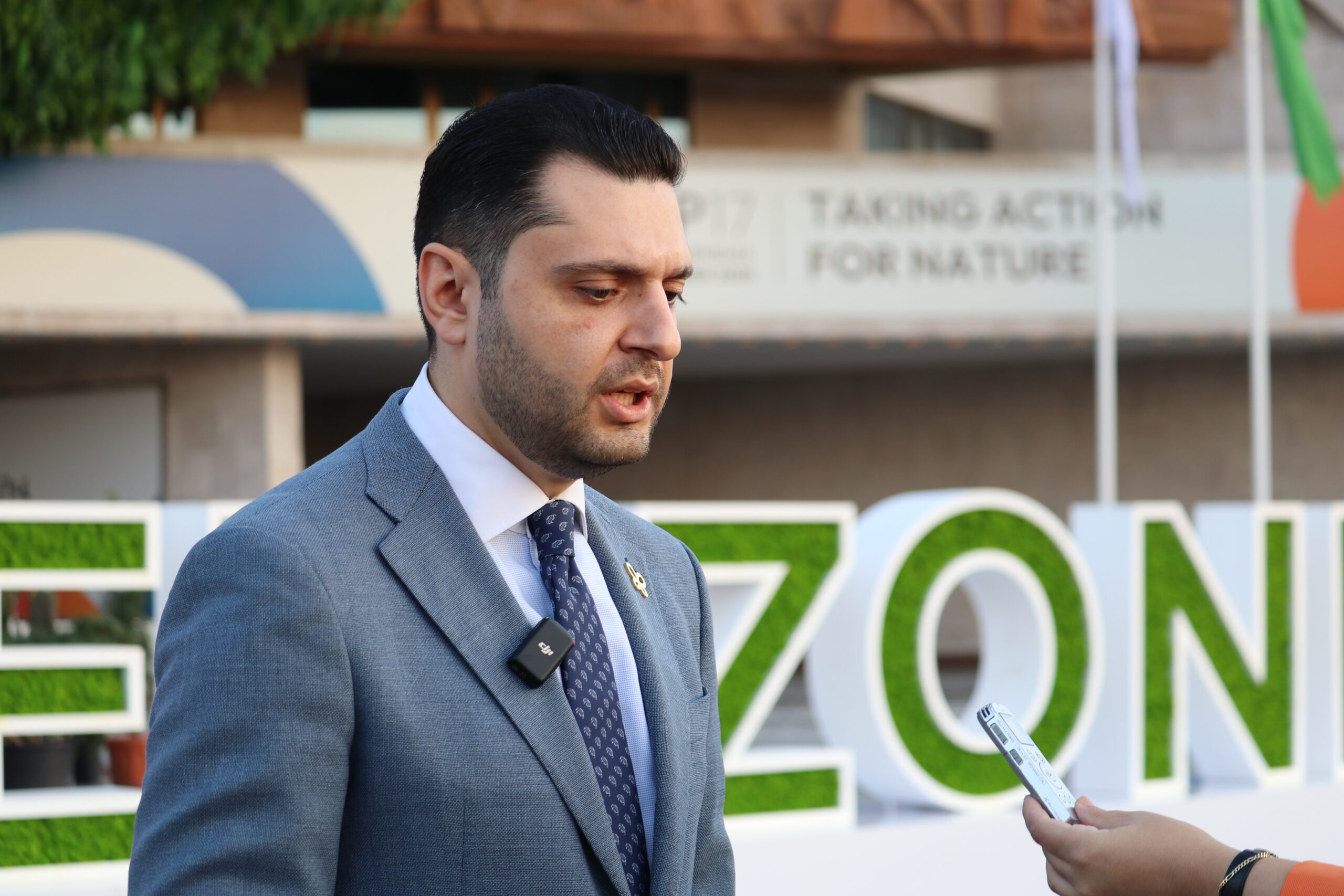
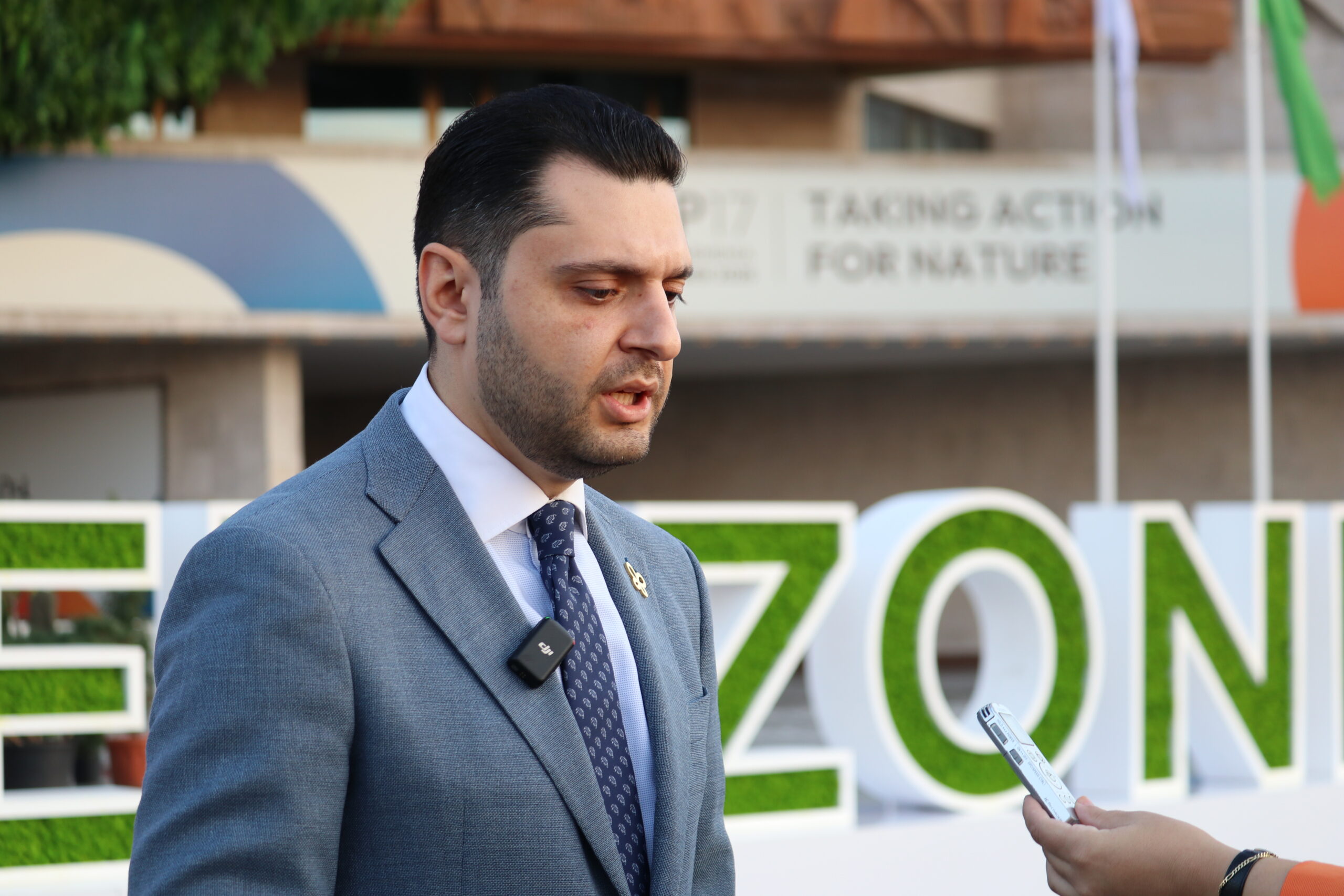
CFACT delegate Alex Newman at UN COP 17 in Armenia
The Armenian presidency’s flagship push, the “Yerevan Call on Incentives Positive to Biodiversity,” is framed as the practical path forward to getting all the loot. The goal is to reform “harmful” subsidies under Target 18 of the Kunming-Montreal Global Biodiversity Framework and divert those resources into “positive” ones instead.
In practice, the policy changes being advocated here are intended to create yet another UN-backed mechanism for central direction of capital, production, and land use. It is all part of the broader UN agenda, outlined in the Sustainable Development Goals (SDGs), to radically shift the way goods and services are produced and consumed.
War on Fake Subsidies
Target 18, adopted in 2022, requires governments to identify, eliminate, phase out, or reform incentives — including “subsidies” — that the UN identifies as harmful to biodiversity. Those supposed subsidies are to be reduced by at least $500 billion per year by 2030, while governments expand economic interventions claimed to be supportive of “biodiversity.”
Keep in mind that many of these allegedly “harmful subsidies” targeted under the plan are not traditional cash transfers or direct government payments at all. Instead, international agencies and their pet “economists” routinely reclassify basic economic activity — such as producing oil, gas, fertilizer, or food — as a “subsidy” simply because it is not taxed or regulated at a rate that accounts for speculative “social costs of carbon” or other unproven environmental externalities.
These social-cost figures are mostly derived from debunked climate models and arbitrary discount rates. Naturally, they can be inflated or deflated at will. And when they are applied, the absence of an extra carbon tax or biodiversity fee is magically transformed into a multi-hundred-billion-dollar “subsidy” that governments are then pressured to eliminate or reform under the Convention on Biological Diversity.
In reality, the activity in question often receives no special government favoritism — it is simply not being penalized for failing to meet an activist-defined price on carbon or nature. Treating the failure to impose such penalties as a subsidy is a rhetorical sleight of hand that converts normal private production into a target for international control.
Massive Wealth Transfers
 The Yerevan Call, launched October 26, packages this all into a political plan backed by the Friends of Target 18, a government-led coalition co-chaired by the governments of Colombia and Finland and convened by the International Institute for Sustainable Development.
The Yerevan Biodiversity Finance Challenge, meanwhile, aims to integrate biodiversity into national budgets, align expenditures with the UN scheme, and design incentives to enforce compliance, all starting with a $2 million call for proposals supported by the German government.
COP17 President and Armenian Environment Minister Hambardzum Matevosyan has been explicit about the reach. “Our work here in Yerevan can influence how natural resources are used, how goods are produced and consumed, and where public and private financial resources are directed,” he said.
Matevosyan, who is overseeing the whole UN summit, added that biodiversity issues “should extend beyond the purview of environment ministries” to finance, agriculture, economy, and development.
Global Environmental Facility slush fund boss Diego Mesa Puyo described the reforms as a way to “advance environmental action while also expanding fiscal space.” This diversion of private capital into the UN’s agenda is especially important because governments are being asked to “achieve more with fewer resources,” he said.
Finland’s Marina Von Weissenberg, co-chair of Friends of Target 18, put it bluntly. “We don’t need to spend more to close the biodiversity funding gap, we need to spend better,” she said. “International coordination is key to giving governments the confidence to lead change.”
UNEP’s Inger Andersen told the high-level segment that biodiversity loss is “an economic problem, and the solutions must reach into the heart of economic decision-making.”
“Positive Incentives”
Aside from enormous spending of taxpayer money, diverting private capital into UN-backed sectors and industries said to be “nature positive” is at the heart of the agenda.
“Spend better,” as co-chair of Friends of Target 18 Weissenberg put it, means systematically screening government budgets and private incentives to penalize activities labeled harmful. These include non-approved agriculture, conventional forestry, hydrocarbon energy, mining, and much productive land use.
On the flip side, the goal is to use policy for channeling capital toward “nature-positive” outcomes defined by the Framework. These policies seek to reward UN-approved “regenerative” practices, “ecosystem stewardship,” and restricted uses, often via payments for ecosystem services, tax shifts, or conditionality on credit and public support.
The Friends platform and Challenge provide the peer pressure, technical assistance, and budget-tagging systems to embed this across ministries and, ultimately, private decisions.
Central Planning, Writ Large
This is central planning by incentive design. Productive sectors that generate food, fiber, energy, and wealth are recast as “problems” to “biodiversity” and “climate” that must be phased down or redirected. Rural livelihoods, meanwhile, are to be managed under a “just transition” that prioritizes compliance with UN targets over owner judgment or even market signals.
Finance and agriculture ministries are drawn into the machine, expanding the oversight reach of governments, UN bodies, and aligned Non-Governmental Organizations (NGOs) into choices once left to private property owners and markets. Ultimately, the UN’s targets are supposed to be embedded into every policy area imaginable.
The deeper connection is to the CBD’s “protected-areas” agenda. Apparently, “protection” of land and water means reducing or even eliminating human access. Target 3’s 30×30 goal — “protecting” 30 percent of land and sea by 2030 through protected areas and “other effective area-based conservation measures” — echoes the Wildlands Project’s core reserves, corridors, and buffers. The Global Biodiversity Assessment once identified these very areas as central to CBD implementation.
Incentive reform supplies the complementary lever: where outright designation or regulation faces resistance, subsidy phase-outs and “positive payments” can make continued productive use economically unviable on private land. That would allow the UN to achieve the same goals without formally seizing property. But the result is the same: progressive erosion of private property rights.
Sovereignty, Too
National sovereignty is also in the UN’s crosshairs here, with everything from budgets and agriculture policy to land-use decisions painted as “collective” issues under a UN framework. Governments in “developing” countries are pressed for both money and anti-market reforms, while Western governments face pressure to hand over more money and redirect existing spending.
The Yerevan mechanisms and the UN focus on “financing gaps” — basically the shortfall between what is available and the money the UN claims is needed — treat economic activity itself as the variable to be managed for planetary targets. That puts business, prosperity, ownership, and more in danger.
Liberty and property rights will not last long if the UN succeeds in redirecting capital in this way, with productive uses penalized and wasteful schemes supposedly mandatory to achieve UN targets. With private decisions requiring alignment with government- and NGO-defined “positive” outcomes, even the private sector will be forced into the trap. What is presented in Yerevan as efficient resource mobilization is, in fact, the operationalization of control. Americans would be wise to pay attention.
Go to Top
The post COP 17 Armenia: From “incentives” to control — UN “biodiversity finance” is really central planning was first published by the Committee For A Constructive Tomorrow (CFACT), and is republished here with permission. Please support their efforts.