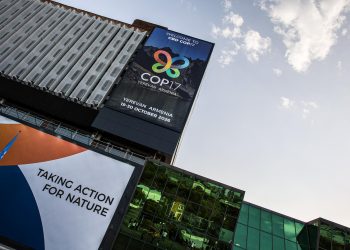


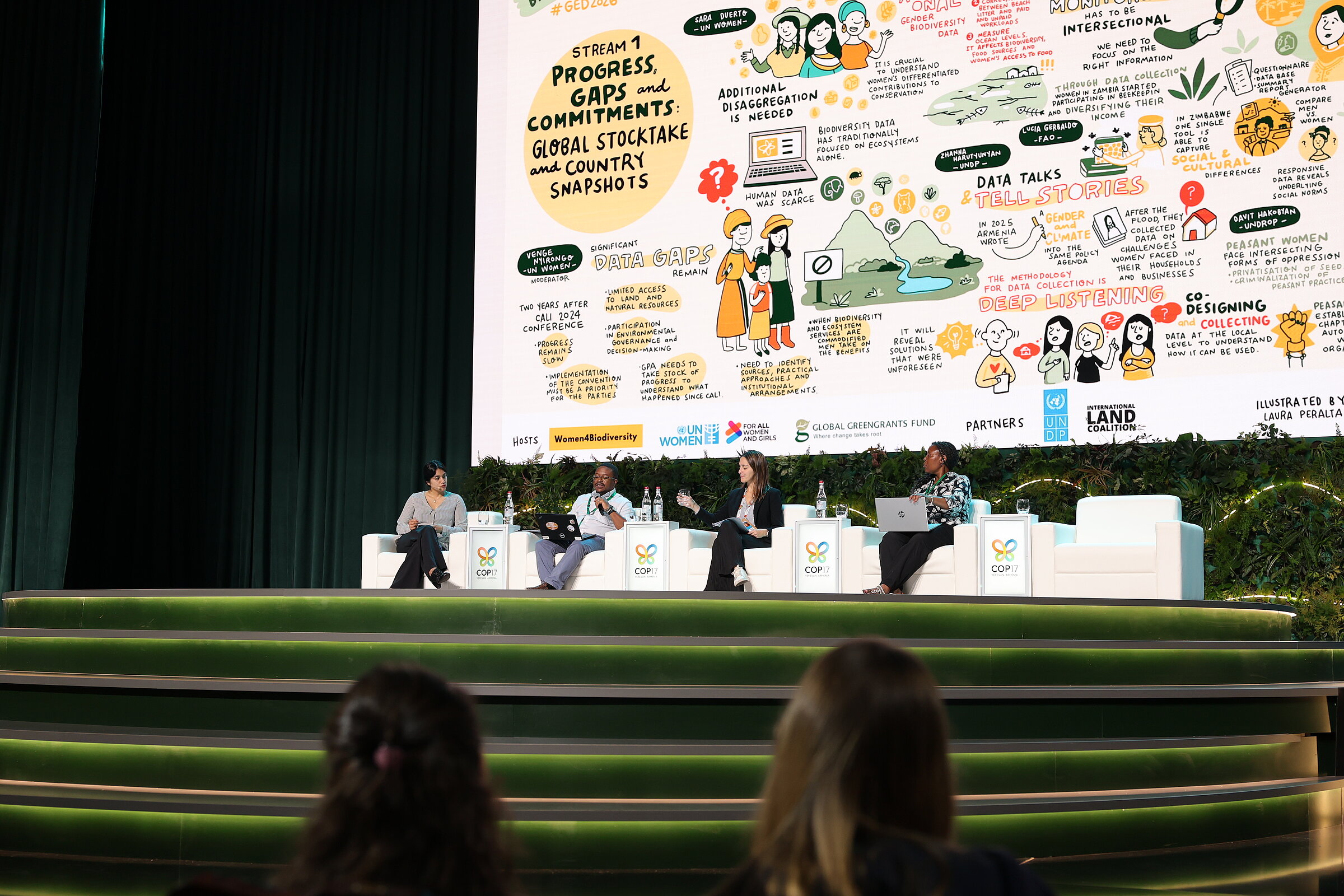
While some Americans are still reeling from a major midterm loss, the global environmental community—which largely aligns with the newly victorious voters back home—just wrapped up a monumental two-week summit in Yerevan, Armenia. Some 13,000 delegates representing nearly 200 countries finalized the Yerevan Pathway. This sweeping global agreement outlines an aggressive roadmap for the planet’s future, dictating upcoming policy for forests, oceans, agriculture, and global

New York State Senator Eric Bottcher
speaking at COP17 in Yerevan, Armenia.
commerce. Ultimately, the agreement seeks to reshape everything under the sun, aiming to fundamentally transform human behavior and recondition how society thinks about the natural world.
As an attendee at the United Nations’ 17th Convention on Biological Diversity (CBD, COP17), listening to and partaking in panel discussions, exhibits, keynote presentations, cultural activities, indulging in free catered food during the day, and witnessing swanky dinners and laughter-filled receptions at night, I am reminded that this gathering is another world. Too many Americans are oblivious, having little to no idea what is being discussed—or how quickly it can and will affect them.
At the heart of COP17 and intertwined in the nearly 600 events was an urgent ultimatum: humanity is driving a global biodiversity crisis that acts as a twin emergency to human-caused climate change.
The mandate was clear: we must safeguard our biosphere before a definitive 2030 threshold, past which life on Earth risks becoming irreversibly altered and the planet becomes unrecognizable and uninhabitable. To halt this collapse, the CBD is pushing to protect as much land and water as humanly possible, targeting a minimum of 30% protection by 2030 (aka 30×30). However, a central theme of the summit was that mere preservation lines on a map are insufficient; true success hinges on connectivity—linking vast conserved landscapes to form a unified, permanently protected global network.
Yes, this means American soil too, public and private. In an interview with Aaron Laur of the Center for Large Landscape Conservation (Bozeman, MT), we asked him what Americans should know about what’s happening at COP17. Laur said, “A big conversation here; it’s not just about protected areas—there are a number of categories—everything from very strict protect
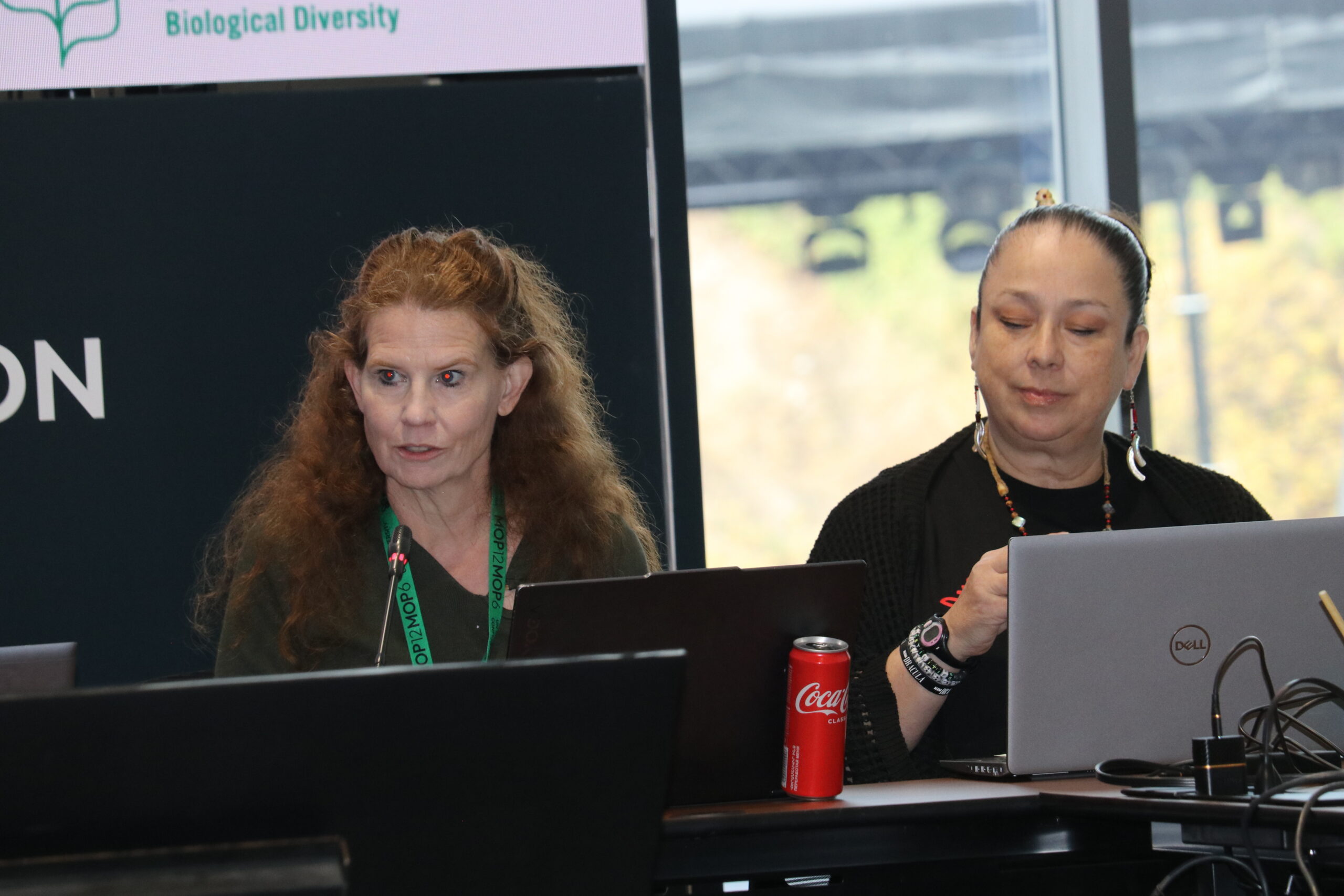
Deanna Armbruster, Executive Director
of the Santa Monica Mountains Fund, presenting on the California 30×30
case study at COP17 in Yerevan, Armenia.
ed areas where people aren’t even allowed to go, other than the rangers and the managers, all the way down to protected areas where people are living and they’re actually practicing certain activities that are allowable in those places.”
On another day, I sat in a fairly well-attended presentation on a California case study in delivering 30×30, titled “Biodiversity at the Edge of a Megacity: Connecting Nature through the Santa Monica Mountains.” Deanna Armbruster, Executive Director
of the Santa Monica Mountains Fund, shared how roads and urban sprawl fragmented habitat. She explained how data on wildlife movement and genetic diversity successfully pushed ecological connectivity into the conservation spotlight, paving the way for the largest wildlife crossing in the world, spanning 210 feet long and up to 174 feet wide, arched over 10 lanes of U.S. 101. She ended her presentation saying, “Effective 30×30 conservation requires connected, functioning ecosystems—not simply more protected acreage.” When the Q&A began, I raised my hand. “How are you navigating land that’s owned privately in your connectivity goals?” I asked. “It’s complicated,” she began, offering a long, roundabout answer that never actually addressed the question.
A few of the US leaders who align with the CBD are obvious: Alexandria Ocasio-Cortez, Bernie Sanders, Al Gore, Gavin Newsom, and John Kerry; the list goes on. Truly, the list goes on to include nearly 50% of voting members in the US Congress, about half of all US state governors, thousands of state legislators, the “Climate Mayors” of more than 350 US cities, and over 1,000 “America is All In” companies like Apple, Google, Walmart, and McDonald’s. It also includes hundreds of colleges and universities, from Stanford and Harvard to MIT and Texas A&M. The consensus machine is vast and just got stronger on election day.
At COP17, the work of completing the global biodiversity agreement was divided between two main groups who spent hours—days, really, with little sleep—negotiating policies that will affect the environment, finance, education, agriculture, business, transportation, housing, and human behavior across countries representing billions of people.
Working Group 1 focused on the financial and policy rules. This team figured out how countries will pay for international nature goals. During COP16, they worked on the Cali Fund, which collects money from companies using digital nature data while checking international progress to map out a clear future path. But they didn’t just look at cash—they also did something historic by creating the Sevan Guidelines (named after a large lake in Armenia), giving Indigenous Peoples a permanent, powerful voice in global decisions. Plus, they made sure countries, big businesses, and local governments have strict homework rules to keep their eco-promises.
In a room the size of a football field, I found Working Group 2. They were tasked with handling the scientific and technical details of COP17’s outcome document. They used data from conservation scientists to update programs designed to manage forests, wildlife, and oceans, keeping in line with the global goal to guard (in perpetuity) 30% of the planet’s land and water. This group also drafted plans to address threats like climate change, farming impacts, forest management, and invasive species. Finally, they worked out safety rules for newer technologies, creating guidelines to manage the potential risks of synthetic biology and genetically modified organisms.
At the helm of Working Group 2 was a high-level diplomat presiding as chair, flanked by the Secretariat. The Chair’s job is to guide discussions and help m
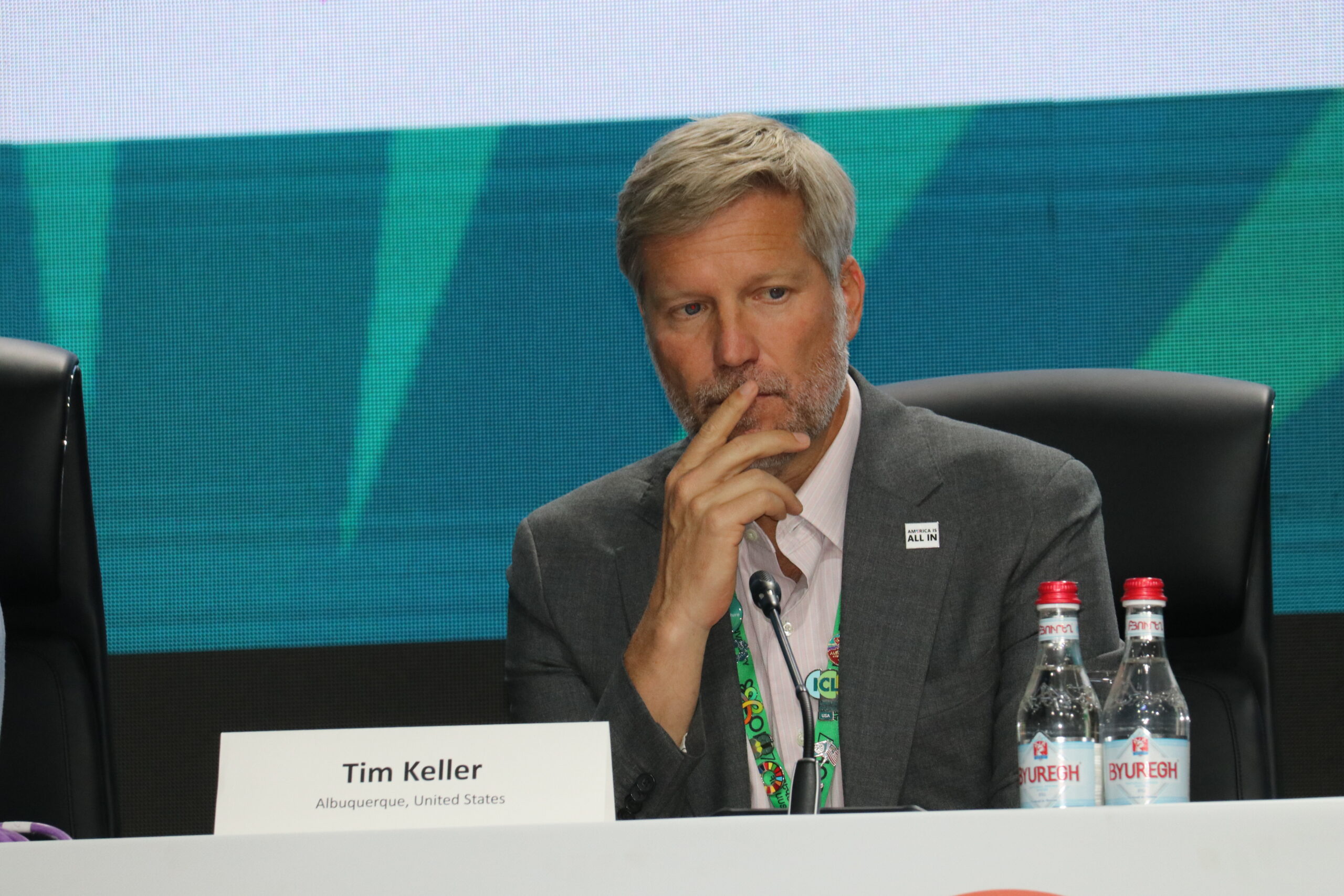
Albuquerque Mayor Tim Keller, a COP17 Super Delegate, at a panel in Yerevan, Armenia.
ember states reach consensus; the Secretariat provides critical legal analysis, ensures text formatting aligns with past UN treaty precedents, and officially reads out newly modified text proposals so that all nations’ delegates are debating the same words.
When I entered the room, delegates of Working Group 2 had already been deliberating for hours. They were debating whether the Rio Conventions—the infamous Agenda 21 blueprint promoting sustainable development—should be added to the text. The room was packed with hundreds of UN delegates who are the official representatives appointed by their national governments to speak, negotiate, and vote on their country’s behalf. The atmosphere was surreal. Delegates from around the world wore live-translation headphones because they do not all speak the same language, yet they must speak as one by the end of the conference to create a document that all must follow. They sat classroom-style at long rows of tables, painstakingly dissecting individual words, sentences, and paragraphs for hours, conceding and consenting on an outcome document intended, again, to govern humanity—private and public institutions alike.
Countries like Argentina and Brazil argued that the text must include the Rio Conventions, the Statement of Forest Principles, the Rio Declaration on Environment and Development, and the three associated conventions: the United Nations Framework Convention on Climate Change (UNFCCC), the United Nations Convention to Combat Desertification (UNCCD), and the United Nations Convention on Biological Diversity (CBD). According to the April/June 1993 edition of the US EPA Journal, the United States was an active participant in all of these, including Agenda 21, which author Kathy Sessions wrote was “so named because it is intended to provide an agenda for local, national, regional, and global action into the 21st century.”
Next, the hundreds of delegates turned to paragraph 8 concerning “sustainable forest management.” The Secretariat read the proposed paragraph: “Encourages parties to implement the expanded program of work on forest biodiversity, applying a gender-sensitive approach and in line with section C of the framework, the goals, circumstances, priorities, and legislation.”
The ensuing debate was a masterclass in bureaucratic paralysis. The Chair called on Argentina, which suggested section C was already inclusive and therefore the “gender-sensitive approach” should be removed. Panama argued to keep it. Russia agreed with Argentina but noted that Namibia had an “intervention” with Russia the night before, so Russia conceded to keep the reference to gender because it’s “bridging language.” Tuvalu complained that its small delegation had missed the earlier discussion and suggested adding “as appropriate,” since some countries lack gender-language legislation. Canada could not accept “gender-sensitive” language and suggested changing it to “gender-responsive.” Guatemala chimed in that gender is “crucial,” suggesting that they just mention targets 22 and 23 of the framework instead. The EU wanted to add “human rights-based approach” as well. Panama interjected, “We don’t see how we can arrive at a consensus with all of the additional suggestions.”
With no consensus in sight, the chair sighed, visibly exasperated. “Yes, we’re making it more and more complex instead of trying to find a way.” He reminded delegates that the language had already been agreed upon in Montreal at COP15, then joked, “I’m trying to find the forest here.” Chuckles rippled through the meeting room, but the tension remained.
After additional debate, Russia proposed deleting the entire paragraph, with China urging the group to move on. The EU objected. The wrangling continued until Canada’s delegate gave voice to the room’s collective fatigue: “I woke up with a major migraine this morning,” he said. “I already took one pill, and I don’t want to take another one. So, I hope we can just accept the text as is. This is a really beautiful text, and let’s move on.” More countries still weighed in. Finally, visibly frustrated, the chair offered a revised paragraph, and the delegates conceded.
Just when delegates thought they were done, the EU reopened an earlier issue concerning the Intergovernmental Science-Policy Platform on Biodiversity and Ecosystem Services (IPBES), which is similar to the IPCC. The EU proposed adding a “summary for policymakers.” The chair was clearly agitated. “We already agreed to move on,” he said. “Please do not reopen text that has already been agreed upon.” When the EU pressed the point, he snapped: “Don’t mix negotiations! That’s between the CBD and IPBES. We’re focusing on forests—and we’re already over time.”
I simply shook my head in disgust. To the lady sitting to my left, I blurted, “This discussion is insane and mind-boggling—all that time over a few words. And what is gender sensitivity for sustainable forest management anyway?” Marianne, a French representative of a game and wildlife conservation in South Africa, totally agreed. She spends much of her time witnessing real people hurting with hunger and struggling for necessities. “All the money and time these people spend to get here to argue over this word and that word, should it go here or there,” she said, “and real people are actually on the ground hurting.” We left the building amazed—in a room of several hundred people, we were probably the only two who thought the verbiage, the process, and the endgame were ridiculous.
On what was supposed to be the final hours of the final negotiation day, we strategically propped ourselves up in the seating area between the press room and the office door to the president of COP17. At separate times, our team was able to ask the top two people at COP for their thoughts about the United States being absent from the negotiations. Both the 33-year-old COP17 President, Hambardzum Matevosyan (he’s also Armenia’s Minister of Environment, who graduated from San Diego State University), and the Secretariat of CBD, Astrid Schomaker, shared similar views: the USA is not a party to the CBD; however, the United States had great representation at COP17, especially California.
They called it a super delegation. Organized in part by ICLEI, the Super Delegation consisted of 70 or more people, many of whom were from California. Wade Crowfoot, for example, is Gavin Newsom’s Secretary of Natural Resources. He oversees some 25,000 employees tasked with things like 30×30 implementation, wolf reintroduction, new water control regulations and enforcement, and “Land Back” initiatives. Elected California State Assembly members Ash Kalra and Gregg Hart (both easily winning re-election), together with Crowfoot, had many opportunities on the world stage to boast about how California is leading the way in the United States with international partnerships (like with ICLEI and the IUCN) and implementing biodiversity policy akin to the CBD.
New York State Senator Eric Bottcher (who was joined by Leslie Boghosian Murphy, the chair of Manhattan’s Community Board 4) was also part of the Super Delegation. In one of his speeches during ICLEI’s 9th Summit, Bottcher mentioned he is at COP17 to meet experts and potential partners to make Manhattan a global model for urban biodiversity. At one point, he said, “We are going to require that cities and towns contribute to housing growth so we can get away from car-centric, low-density sprawl…there are carrots requiring that they contribute to housing growth but also sticks…” He also said such measures would be required statewide. Bottcher mentioned authoring more legislation to help eliminate required parking garages in new housing developments. “Transit-oriented development is biodiversity policy,” preached the state senator. He ended his time on stage announcing Manhattan’s first local-global biodiversity strategy and action plan that he and New York State Senator Brad Hoylman-Sigal are working on.
Tim Keller, mayor of Albuquerque, New Mexico, was not only a Super Delegate and panelist but also shared the stage with a dozen or more people representing Chinese cities who received certificates for registering their cities into ICLEI’s Cities with Nature program.
We also found out US diplomats attended COP17. As many as 11 research legal experts and civil servants within the State Department’s OES Bureau and USDA attended as observers, not as voters. In a panel discussion about gene banks, I happened to meet one of the state career employees, who told me they were present to help shape and guide policy on behalf of the current administration.
Finally, on a Saturday morning that felt like an eternity, the closing press conference took place. The “Yerevan Pathway” was unveiled—essentially a stack of fifty decisions aimed at accelerating the Kunming-Montreal framework. The dynamic between ambition and reality was on full display: the delegates identified a massive “nature-finance gap,” noting that while $220 billion supported nature-based solutions in 2023, they actually need $571 billion annually by 2030. They announced $2 billion in new funding with great fanfare, while conveniently punting the truly difficult, systemic arguments about corporate contributions and digital sequence data to COP18 in Quito.
As the delegates packed their bags, one thing was clear: the bureaucracy has succeeded in generating a roadmap, but it has failed to bridge the distance between lofty rhetorical acrobatics and the messy, actual world outside the conference center. For those watching from the sidelines, the message is inescapable: expensive, word-obsessed summits rarely produce true progress. The CBD’s obsession with “gender sensitivity” in forest management—arguing over phrasing for hours—was a perfect microcosm of this dysfunction. Diplomats seem convinced that the solution to complex local land tenure issues is simply to draft more global mandates, entirely ignoring the reality of the people they claim to be helping.
Next stop: the COP31 climate conference in Antalya, Turkey, running November 9–20. While the biodiversity team did not hand over a literal rulebook, they left a crucial reminder for climate negotiators: nature and climate change are two sides of the same coin. No doubt, a phalanx of newly elected and re-elected American officials will descend on Antalya, eager to profess support for environmental policies that often seem designed to hamper, rather than foster, progress. Ultimately, there remains a profound, almost comical, disconnect between those who hold the pen and those who must bear the burden of the ink.
For Americans who still harbor a quaint fondness for liberty, the lesson is clear:
Authority should stay as close to the people as possible, not be delegated to an exhausting, expensive circus of foreign diplomatic wordsmithing. Liberty isn’t found in a “Yerevan Pathway,” and it certainly isn’t in a paragraph about gender-sensitive forest management. It is found in the ability to make your own choices, entirely free from the oversight of a global class that seems more concerned with the precision of its rhetoric than with the reality of Mother Earth, Gaia, the biosphere it purports to save.
Featured image UN photography
Go to Top
The post Bureaucratic blueprint at the UN’s biodiversity wilderness was first published by the Committee For A Constructive Tomorrow (CFACT), and is republished here with permission. Please support their efforts.