



As the Nov. 3 Election Day fast approaches, America’s regional power grids offer a revealing lesson in affordability and reliability. With nearly half of registered voters saying the cost of living will be the single most important factor in deciding their vote this fall, Americans’ power bills are on the ballot.
One reason those bills are under pressure is that demand is growing faster than supply. The Energy Information Administration expects U.S. electricity consumption to reach record levels this year and next year, as the economy grows, manufacturing expands and Americans use more electricity in their daily lives. The challenge is making sure we build enough new power, fast enough, without driving up costs.
PJM, the nation’s largest power market, offers a warning about what happens when demand grows faster than supply. Its latest auction for future power supplies hit the maximum price allowed, yet the region still failed to secure as much power as it says it will need and attracted very little new generation. In other words, people are paying more for electricity while the region still struggles to build enough new power.
That should be a warning for policymakers everywhere. When it takes too long to build new energy infrastructure, everyone can pay the price. That is why President has made “energy addition, not subtraction” a guiding principle. It means using every source that can reliably put power on the grid, from natural gas and nuclear to solar and storage. Each has a role to play. What matters most for families facing higher bills is how quickly new supply can actually come online.
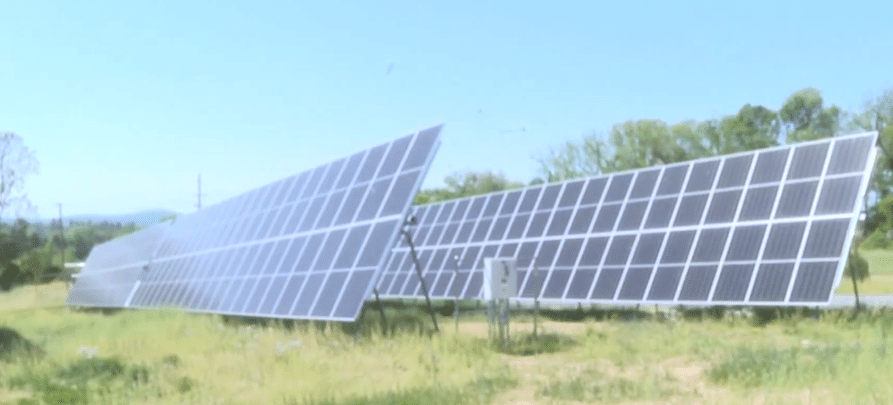
Solar and storage are already doing much of the work. Together, they accounted for 70 percent of all new electricity-generating capacity added to the American grid in the first half of this year, according to data compiled by the Energy Information Administration. Solar alone accounted for 45 percent. That does not mean these resources can meet every need. It means an affordability strategy that sidelines them would ignore most of the new power America is currently building.
States Trump won in 2024 are proving the point, accounting for nearly three-fourths of new solar capacity installed in the first half of 2026.
Texas is the clearest example.
The Lone Star State has paired rapid solar development with growing battery capacity that can store electricity when the sun is shining and provide it in the evening hours, when families come home and demand remains high. This summer, Texas’ main grid operator, ERCOT, reported that solar helped meet demand during the day, while batteries helped serve record demand in the evening. Texas shows how different power sources can work together to keep the lights on as electricity use grows.
This is an industrial story as much as an energy one. America is in a contest with China over the technology, factories and infrastructure that will shape this century. On solar and storage, American workers and companies are delivering. Since 2017, the United States has risen from 14th in the world in solar module manufacturing to third, and it now ranks second in energy storage manufacturing.
For the first time since 2016, every major component of a solar module is being manufactured in the United States, and domestic module manufacturing capacity is now large enough to meet expected U.S. demand. That progress shows up as factories, supply chains and paychecks in American communities, many of them in the same states leading on deployment. It also makes America less vulnerable to disruptions abroad.
That is beginning to answer one of the longest-running arguments against solar, that building more of it means depending on Chinese factories. Every new American factory strengthens the domestic supply chain and reduces the country’s reliance on imports.
That is also why the emerging bipartisan permitting discussion in Washington matters. Negotiators say many of the major hurdles have been overcome, although the final legislative text is still under discussion. Power projects cannot lower bills while they are trapped in duplicative reviews or waiting years for permission to connect to the grid. Any serious affordability agenda should include predictable permitting timelines, faster interconnection, and the transmission needed to move new electricity where it is needed.
Candidates do not need to choose between lower bills, reliable power and American manufacturing. The same agenda advances all three. Build more energy. Connect it faster. Build more of the equipment here at home.
Demand will keep rising long after Election Day. This fall, voters can decide whether America builds more power so families can pay less.
Robert Romano is the Executive Director of Americans for Limited Government.
The post As The Midterms Approach, Power Bills Are On The Ballot appeared first on Daily Torch.
The post As The Midterms Approach, Power Bills Are On The Ballot was first published by the Daily Torch, and is republished here with their permission. Please support their efforts.