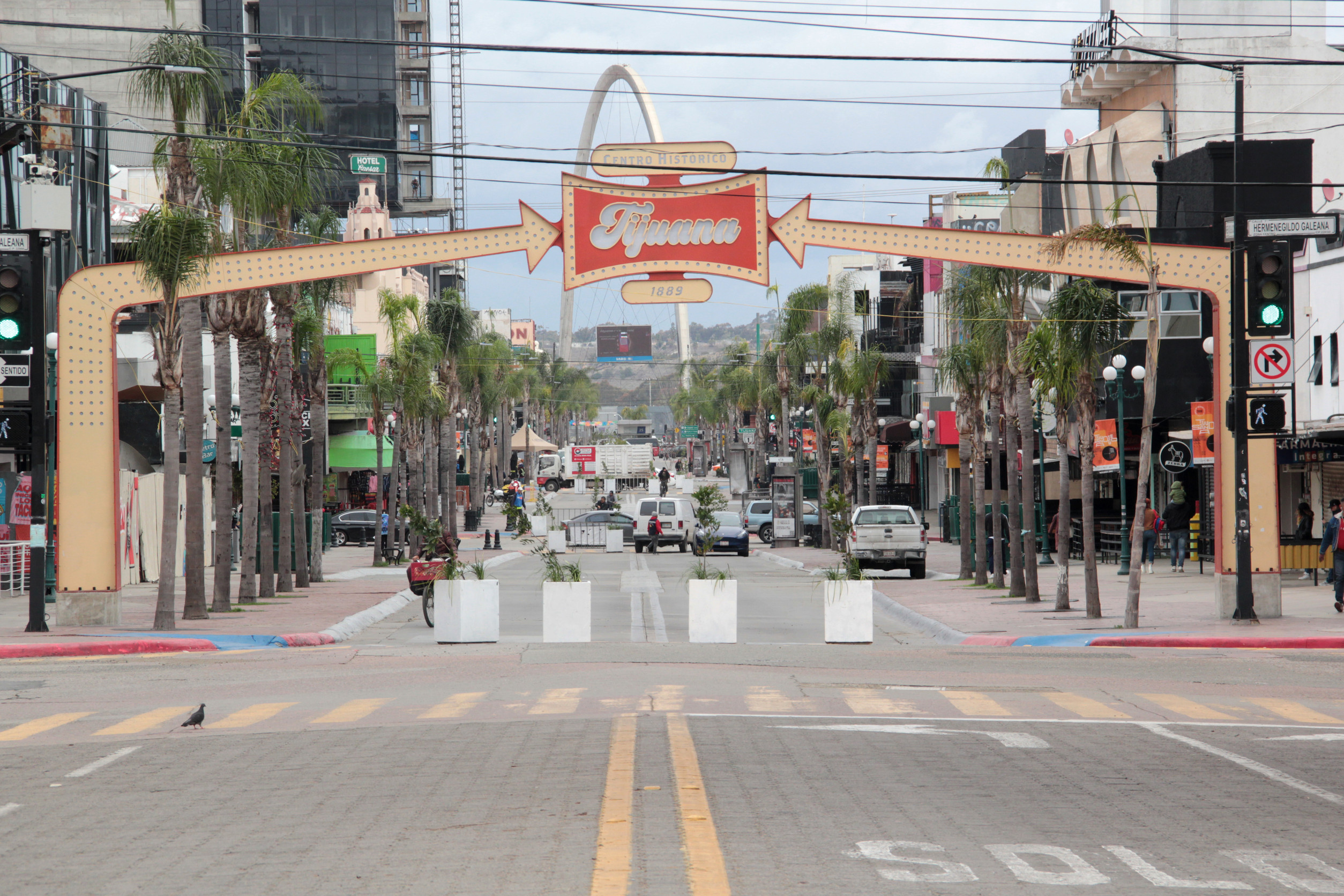
Since the 1930s, Mexico has released hundreds of billions of gallons of untreated raw sewage into the Tijuana River, which flows north into San Diego County. This has caused years-long beach closures, foul odors, degradation of the Tijuana River Valley, and lost economic opportunity. These air- and water-borne pathogens make people sick on both sides of the border.
Decades of neglect and intransigence were interrupted in 2020, when Congress approved a $300 million fund to expand the International Wastewater Treatment Plant San Ysidro, or so we thought. Instead, half of the allocation was used to address deferred maintenance after Hurricane Hilary further damaged the inadequate infrastructure.
Meanwhile, Tijuana’s own crumbling wastewater system suffered several pipeline breaks, allowing 33 billion gallons of sewage and chemical tainted water to flow into San Diego just in 2024 – putting additional pressure on the U.S.-based plant, causing it to rack up numerous clean water violations.
In December 2023, the International Boundary and Water Commission announced a Rehabilitation and Expansion Progressive Design-Build project for the International Wastewater Treatment Plant, but until now, little progress has been made to actually solve the problem.
In 2024, California officials begged Congress for another $310 million in federal funds, but despite lip service in support of the effort, California Governor Gavin Newsom refused to declare a state of emergency even as state auditors were uncovering up to $72 billion of state revenues lost to waste and fraud.
All that changed with the 2024 reelection of Donald Trump. Last April, EPA Administrator Lee Zeldin took a helicopter tour of the area. By July, he had negotiated a new Memorandum of Understanding that outlined a fast-tracked strategy to complete all infrastructure projects under Minute 328 of the U.S.-Mexico Water Treaty by the end of 2027 – including a “100% solution” to the near-century-old flow of untreated sewage from Tijuana into Southern California.
Under the MOU, Mexico obligated $93 million to accelerate the timeline for project completion and launch construction on projects to divert up to 10 million gallons per day (MGD) of treated effluent and rehabilitate the Parallel Gravity Line by the end of 2025.
The U.S. in turn agreed to complete upgrades to Pump Station 1 and the Tijuana River collection system, while the IBWC promised to complete expansion of the South Bay International Wastewater Treatment Plant from 25 to 35 MGD.
And just last month, Zeldin announced the signing of Minute 333, another historic binational agreement that calls for significant new actions to address Tijuana River contamination. The U.S and Mexican sections of the IBWC agreed to new infrastructure projects, research, enhanced monitoring, and planning for operation and maintenance of critical sites and systems that will account for future population growth in Tijuana – a key component missing from all prior binational agreements for the area.
In signing the agreement, Zeldin emphasized the importance of accounting for the “inevitable population growth of Tijuana and surrounding areas” in Minute 333. Zeldin said he saw the frustration of San Diego area residents firsthand in April and promised a 100% solution.
The new agreement requires Mexico to build new wastewater infrastructure and to work harder to properly operate and maintain existing – and new – facilities. Mexico also agreed to enhance technical information sharing, promote industry best practices for wastewater and stormwater management to be consistent with U.S. practices, and to strengthen public communications.
Minute 333 also authorizes creation of an operations and maintenance account at the North American Development Bank that will set aside a portion of any future dollars provided to Mexico to be held for future O&M costs.
Mexico must develop a Tijuana water infrastructure master plan by June 2026, and a Minute 333 binational working group will be created to assess the feasibility of constructing an ocean outfall for the San Antonio de los Buenos Wastewater Treatment Plant as well as for expanding its capacity from 18.26 MGD to 43.37 MGD.
Mexico also agreed to construct a sediment basin in Matadero Canyon (Smuggler’s Gulch) before the 2026-27 rainy season and to construct the 3 MGD Tecolote-La Gloria Wastewater Treatment Plant by December 2028. And that’s not all.
Solving a near-century-old wastewater controversy in Baja California was hardly the only U.S.-Mexico border action involving wastewater tackled by the Trump 47 administration. While President Trump has infuriated Mexican officials with plans to expand the border wall, the U.S. State Department boasts of a “new era of cooperation characterized by swift and decisive actions” regarding Rio Grande water quality.
While Congress is far from passing its fiscal 2026 federal budget, spending bills for natural resource and environment agencies have maintained support for the EPA’s border wastewater programs funded through North American Development Bank grants. The Senate bill authorizes $36 million, while the Houwe bill would allow $45 million to be spent on border wastewater projects – comparable to prior spending levels.
Across the border there is a renewed emphasis on improving debilitated wastewater and sewer systems. When Nuevo Laredo Mayor Lilia Canturosas took office in 2021, broken sewer lines were leaking wastewater onto city streets.
Under the direction of general manager Silvia Fernandez Gallardo, COMAPA (the potable water and sanitation commission) in 2023 broke ground on an $80 million binational project to repair the failing wastewater plant and damaged sewer lines. One treatment plant repair stopped a flow of 12 MGD of raw sewage into the Rio Grande and local groundwater.
In her view, binational collaboration is the key to improving the lives of people on both sides of the border. She told reporters that, “Rehabilitating the Rio Bravo doesn’t just mean improving local environmental conditions. It also represents an opportunity to move toward shared water security between Mexico and the United States.”
Further collaboration will be necessary to fully clean the Rio Grande (Rio Bravo). South of the Amistad Reservoir, downstream of Laredo and Nuevo Laredo, the IBWC’s 2024 Rio Grande summary report found E. coli readings nearly 2,000 times the Texas water quality standard
This part of the Rio Grande below the Amistad Reservoir, known as segment 2304, exceeds Texas standards for bacteria. The report warns these readings demonstrate “serious health risks” and that the water is unsuitable for recreational activities, consumption, or even river crossings. The IBWC says bacteria levels are also elevated in the urban areas of El Paso/Ciudad Juarez, Del Rio/Ciudad Acuna, Eagle Pass/Piedras Negras, and in Hidalgo County.
So while President Trump and Administrator Zeldin can take some credit for tackling a job no one else had done successfully (the Tijuana River), the many remaining problems with wastewater and water quality – from the Pacific Ocean to the Gulf of Mexico – demonstrate there are miles to go before anyone can really take a victory lap.
The post While Newsom combs his hair, Trump is protecting California from raw sewage was first published by the Committee For A Constructive Tomorrow (CFACT), and is republished here with permission. Please support their efforts.