
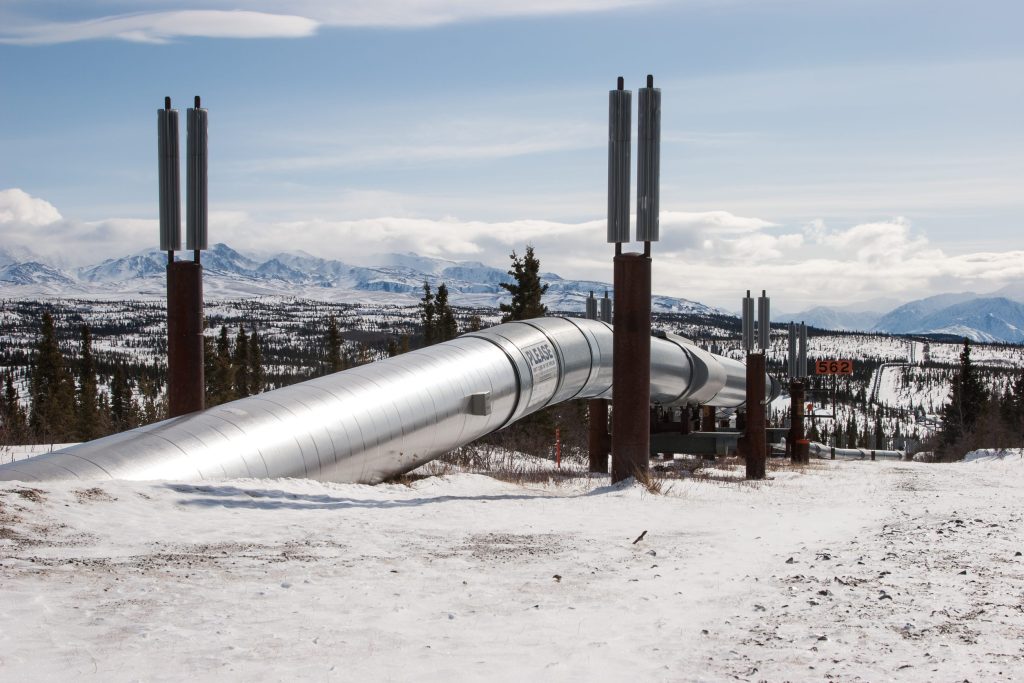
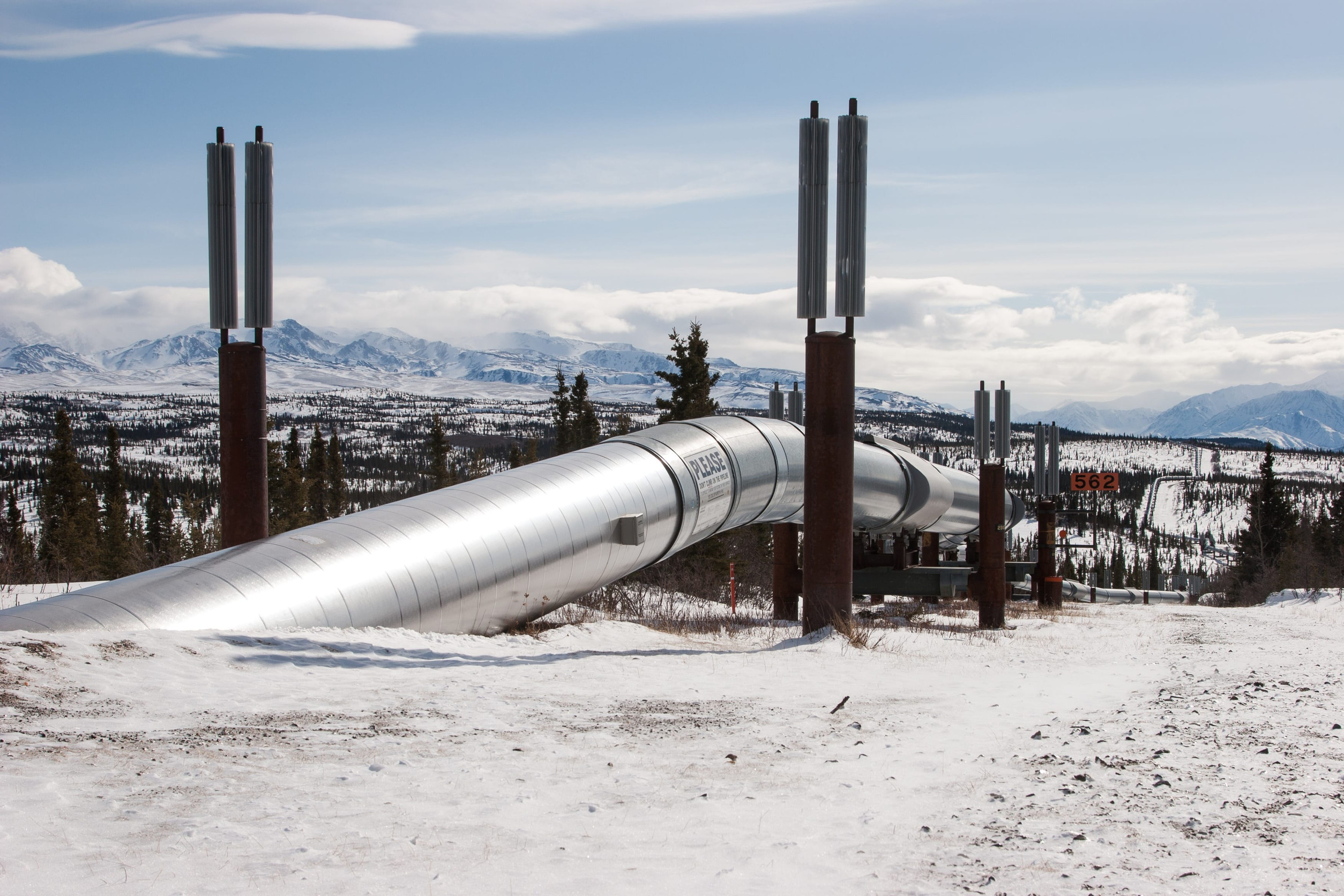
Recent announcements by South Korea and Taiwan that they were open to investing $54 billion and $80 billion, respectively, in a new Alaska pipeline that would transport natural gas from Arctic oilfields along a pathway similar to that of the Trans-Alaska oil pipeline have Alaskans both excited and yet skeptical. They have, after all, been waiting for decades.
Should the new pipeline — and new mining projects — come to fruition, by the early 2030s, the 49th state could be in the midst of a new (liquid) gold rush – making the $7.2 million Alaska Purchase, authorized by Secretary of State William Seward, a better bargain than ever.
To cartoonists like Thomas Nast, the Alaska Purchase of 1867 was a bad joke — Seward’s Folly. Horace Greeley’s New York Tribune called it “Seward’s Arctic Circus.” A year later, President Andrew Johnson was (unsuccessfully) impeached.
While the laughing stopped with the 1896 Klondike Gold Rush, it was the discovery of “black gold” that eventually led to the long-running war against development of Alaska’s vast mineral resources. Even today, the biggest risk factor for investors in Alaskan minerals is political — President Biden illegally canceled Alaska oil and gas leases on his first day in office.
Already strong opposition to oil production in Alaska’s North Slope was squelched in the wake of the Arab Oil Embargo of 1973. The long lines for scarce gasoline enabled President Nixon to win passage of the Trans-Alaska Pipeline Authorization Act. By 1977, the 800-mile, 48-inch-diameter pipeline began transporting crude oil from Prudhoe Bay to the Valdez Marine Terminal.
The election of Ronald Reagan as President in 1980 gave hope to the pro-development forces, but the hue and cry in the wake of the Exxon Valdez oil spill left the issue in limbo — where it remained until the election of pro-development President Donald Trump.
While the Tax Cut and Jobs Act of 2017 officially opened the Arctic Refuge to energy development, the Biden administration suspended Trump-era oil leases on federal lands on Day One. But no sooner than Trump was sworn in for his second term, he again reopened the Arctic National Wildlife Refuge to oil and gas extraction and restored the leases.
Decades of suppression of Alaska oil exploration and development have played a role in the decline in oil production from 2 million barrels per day in the late 1980s to just 420,000 barrels per day today. Alaska natural gas production, however, has remained in the range of 29 to 32 billion cubic feet per year over the past 20 years.
Cook Inlet natural gas is largely used within Alaska for fertilizer production in Kenai and heating and power in Anchorage. In addition, at the Cook Inlet LNG Terminal, natural gas is liquefied for shipment, largely to Japan, under Energy Department licenses. North Slope natural gas has largely been reinjected because there is no pipeline to ship the gas — an estimated 35 trillion cubic feet — to markets.
All that may soon be changing if politics allows. The pipeline (and various mining projects) could soon end decades of frustration for Alaskans and solidify relations with Far East allies, just as new mining projects could ease concerns over foreign (mostly Chinese) control over the U.S. critical minerals supply chain.
The state-owned Alaska Gasline Development Corporation (AGDC) had been developing a plan for an 810-mile, $44 billion pipeline to transport about 3.9 billion cubic feet per day of stranded natural gas from the North Slope for liquefaction at an ice-free port facility in southern Alaska. The project, which would produce up to 20 million tonnes per year of LNG, just needed major financing partners.
Glenfarne Group, LLC, a New York-based development firm, through Glenfarne Alaska LNG, LLC, in 2025 entered into a 75-25 partnership with the AGDC under the banner 8 Star Alaska, which now owns all Alaska LNG project assets, permits, engineering data, and rights-of-way.
With all permits and rights-of-way granted and all engineering and environmental studies completed, the only thing standing in the way of construction has been secure purchase contracts and the financing for construction of the pipeline, liquefaction facilities, and port expansion.
Just this month, both South Korea and Taiwan have stepped up to provide that financing — provided the U.S. and 8 Star Alaska can demonstrate the project will be profitable. The $54 billion South Korean investment announced on October 1 by President Trump was contingent, according to the South Korean government, on finalization of commercial and legal conditions.
Glenfarne said at the time it had lined up commitments for the purchase of 13 million tonnes per year (tpy) but needed another 3 million tpy to support a final investment decision that would make those commitments binding. This includes commitments from Japan’s two largest LNG importers — JERA and Tokyo Gas — for a combined 2 million tpy.
Two weeks later, the second shoe dropped — with Taiwan’s commitment to an offtake investment of $70 to $80 billion to secure a 30% stake in the pipeline project for the next two decades. Taiwan also pledged $4.4 billion in direct equity investment. These two major commitments have brought the long-awaited Alaska LNG project closer than ever to fruition.
The natural gas pipeline is not the only good news for Alaskans eager for economic development and jobs. According to the Alaska Department of Natural Resources, mining today supports 12,400 direct, indirect and induced jobs for Alaskans and brings $1.1 billion to over 500 local businesses for goods and services. Mining also brings in $425 million in royalty payments to Alaska Native Corporations.
In mid-September, the U.S. government announced it had become a 10% owner of Trilogy Metals – after closing a $35.6 million investment aimed at advancing Trilogy’s Upper Kobuk Minerals Projects (UKMP) in northwestern Alaska. The properties are held by Ambler Metals, a 50-50 joint venture between Trilogy and Australian miner South32.
UKMP is a potential new U.S. source of copper, zinc, and other metals vital to domestic supply chains. Trilogy’s Arctic project was added earlier this year to the FAST-41 program that seeks to improve coordination among federal agencies to accelerate permitting for major infrastructure and critical minerals projects.
The project, long opposed by anti-development forces, anticipates a 13-year mine life averaging annual production of 149 million pounds of copper and 173 million pounds of zinc plus smaller quantities of lead, gold, and silver. The only federal permit needed is a Section 404 authorization, which Trilogy hopes to have completed by late 2028. The U.S. Army Corps of Engineers on September 18 opened a 45-day comment period regarding the Section 404 permit.
In addition, the Alaska DNR lists numerous large-mine projects in the permitting or development stage, including Graphite One, the Palmer copper-zinc project, the Niblack copper-gold-zinc deposit, and the Bokan-Dotson Ridge rare-earth elements project. Another proposed mining project, the copper-gold-molybdenum open pit Pebble Mine project in southwest Alaska, remains blocked by federal environmental rulings and ongoing litigation.
The rush, however, is on.
This article originally appeared at RealClear Energy
Go to Top
The post The new Alaska gold rush was first published by the Committee For A Constructive Tomorrow (CFACT), and is republished here with permission. Please support their efforts.