

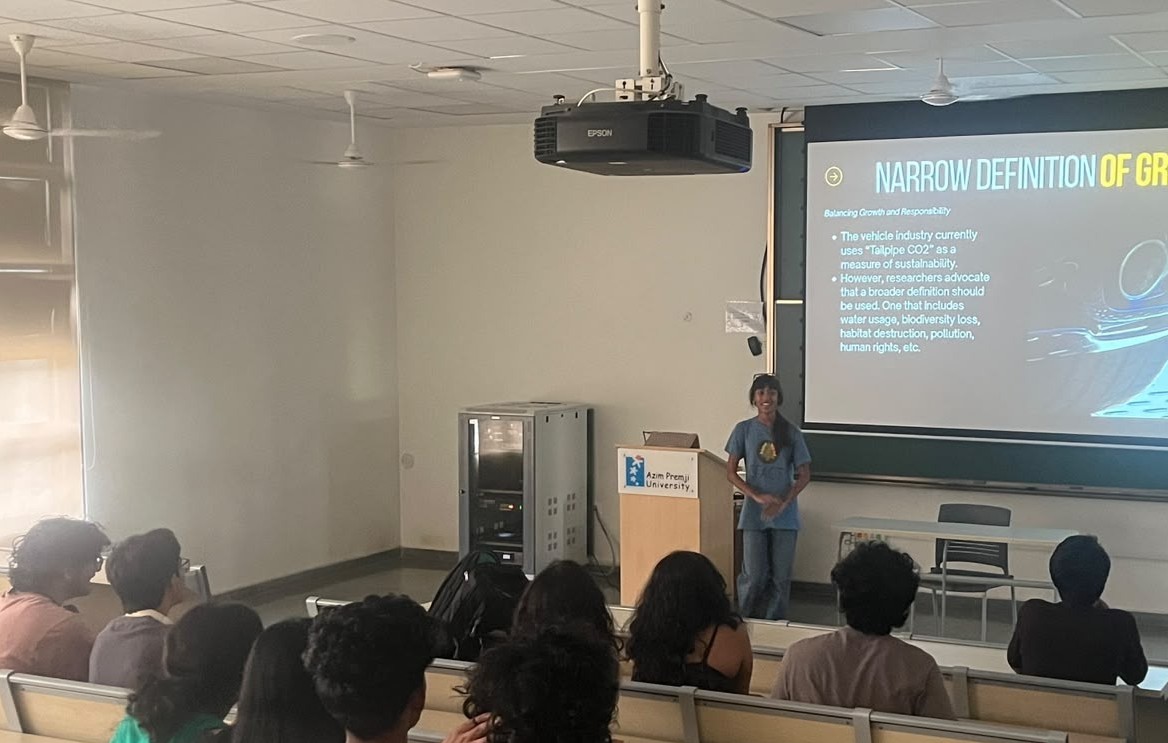
On October 8, second-year environmental science majors at Azim Premji University in Buragunte, India, gathered on campus for a focused 20-minute presentation and open discussion that asked a direct question: Are electric vehicles (EVs) really more sustainable than gas-powered vehicles??
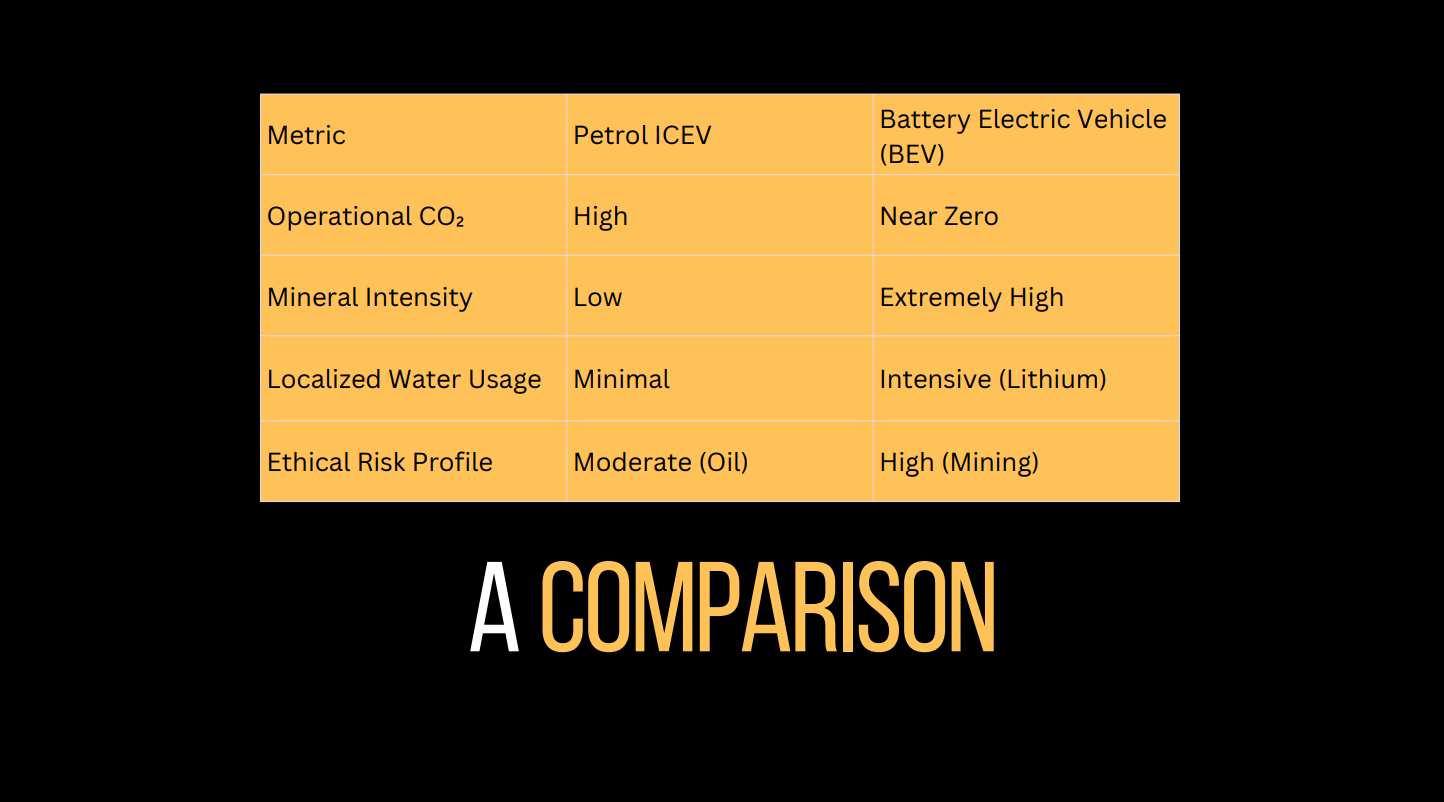
CFACT Collegian Celeste Meyn led the session, walking the group of students through the less-publicized trade-offs that sit behind the “near-zero tailpipe” narrative. Drawing on a full lifecycle assessment approach, her slides compared traditional internal-combustion vehicles with EVs across operational CO₂, mineral intensity, localized water use, and ethical risk. The contrast was clear: While electric vehicles score better on tailpipe emissions, they carry extremely high critical mineral demands, dangerous lithium-related water usage, and clear ethical conundrums tied to slave and child labor in raw material supply chains.
Modern EVs rely heavily on large quantities of lithium, cobalt, and manganese. Lithium mining, often conducted in arid regions, requires up to 2 million liters of water per ton of lithium and has been linked to local water shortages. Cobalt production, concentrated in the Democratic Republic of Congo (which supplies over 70% of the cobalt used in EV batteries), is associated with toxic groundwater contamination and significant human-rights concerns.
One slide highlighted India’s emerging battery-waste challenge. Citing research that an estimated 12 million tons of lithium-ion batteries could accumulate in the country by 2030, Meyn noted the absence of adequate disposal systems. Without proper recycling or recovery infrastructure, many batteries risk ending up in landfills or bodies of water, where toxic chemicals can leach into soil and local water supplies.
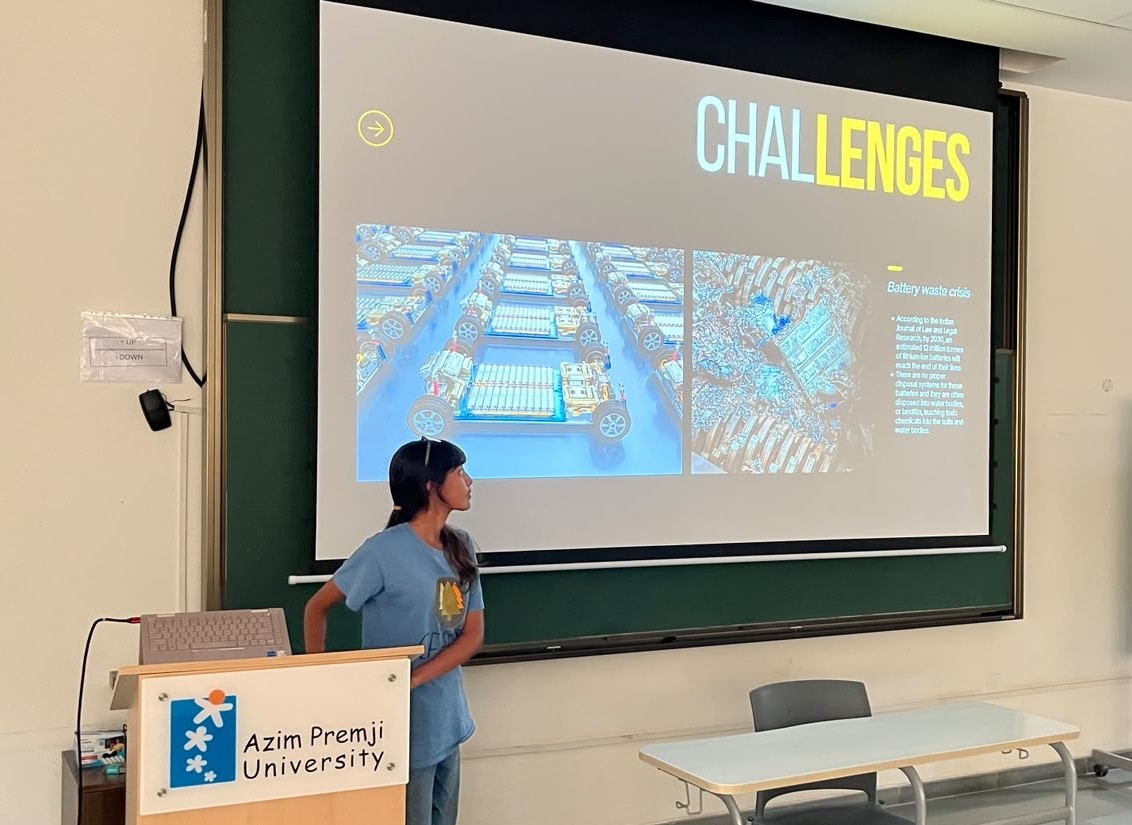
By 2030, India is projected to generate about 2 million tons of spent lithium-ion batteries, yet the country currently lacks adequate recycling and disposal infrastructure. As a result, many end up in landfills or waterways, where they leach toxic metals (lithium, cobalt, nickel, and manganese) into soil and groundwater.
Another segment addressed the battery supply chain and human-rights concerns. The presentation covered documented issues with cobalt mining, including child and slave labor in parts of the Democratic Republic of the Congo, unsafe work environments, and labor exploitation. Students saw side-by-side images of battery production facilities and maps underscoring how distant supply chains—often lacking traceability—are invisible in renewable energy marketing. Manufacturers frequently fail to verify the origins of their minerals, meaning many consumers drive vehicles built with materials sourced from exploited labor.
Celeste also pushed back on the industry’s narrow definition of sustainability. The vehicle sector currently leans heavily on “tailpipe CO₂” as its primary metric. She argued for a wider lens that includes water use, biodiversity loss, habitat disruption, pollution, supply chain environmental footprints, and human-rights considerations — precisely the factors that appear when the full life cycle of battery and car component materials is examined.
The subsequent Q&A and discussion proved fruitful. Participants explored practical solutions to vehicle pollution questions while weighing real-world constraints and realities. One recurring topic was India’s push toward 20 percent ethanol-blended fuel as a standard.
Students noted widespread public resistance, driven by reports that the higher ethanol blend reduces engine efficiency and overall vehicle mileage, while damaging older vehicles altogether. In a developing country like India, vehicles are often the lifeline of families, clans, and communities. A shot engine or paying more at the pump could be the difference between food on the table and hungry bellies.
The event stayed grounded in data and comparison rather than slogans. By placing mineral intensity, water use (including the intensive demands of lithium extraction), waste management, and supply-chain ethics alongside the Greens’ tired tailpipe advantage quip, Meyn illustrated perfectly for her classmates why a fuller accounting is necessary before labeling any technology “more sustainable.”
Go to Top
The post Indian Collegian Challenges EV “Sustainability” Claims was first published by the Committee For A Constructive Tomorrow (CFACT), and is republished here with permission. Please support their efforts.